Shri Vishwa Niketan / Fortnightly digest / For private circulation only 16 October 2026 · Ashwin Shukla 6 · Vik. Samvat 2083 · Yugabda 5128 · Issue SM8014 · 22 dispatches |
 |
| Parv 01 | | Sangh 05 | | Vishwa 04 | | Seva 03 | | Rashtra 02 |
| Gaurav 04 | | Pustak 01 | | Aagami 02 | | Vichar |
|
In this issue · tap a headline to jump |
|
| Parv पर्व | Festival | | 01 dispatch |
|
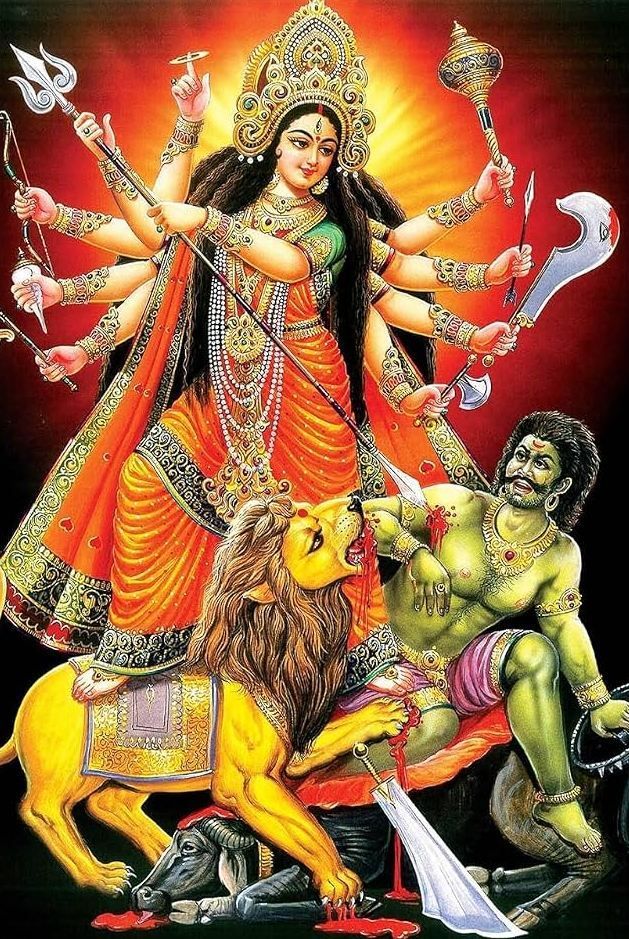
Maa Durga's victory over Mahishasura |
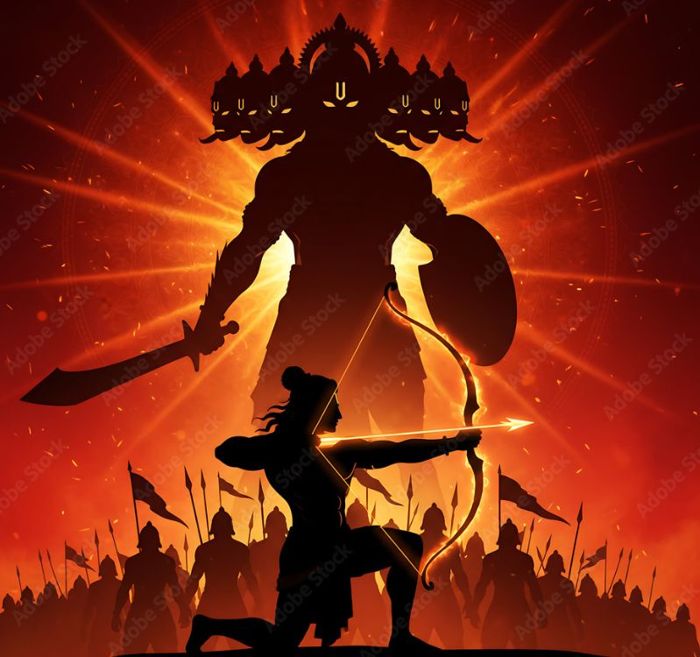
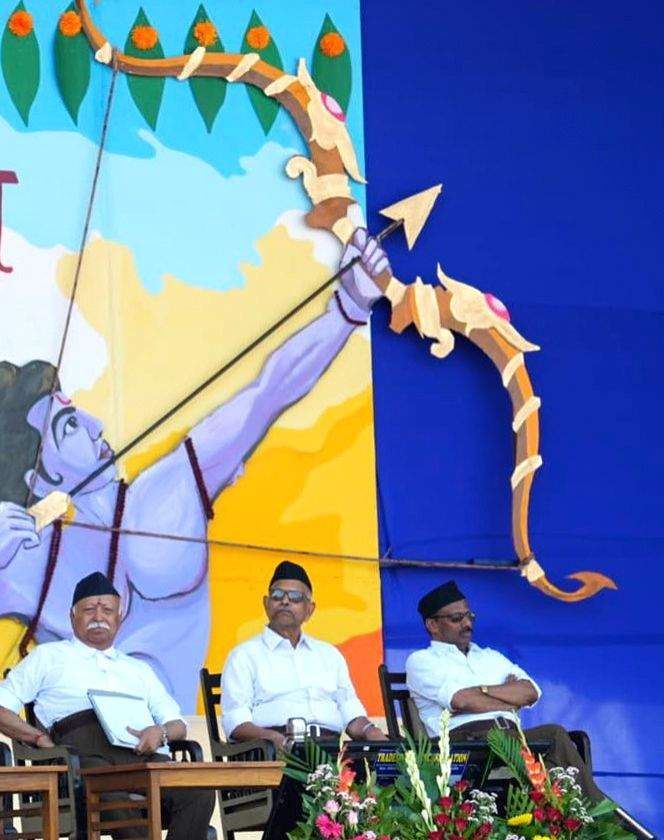
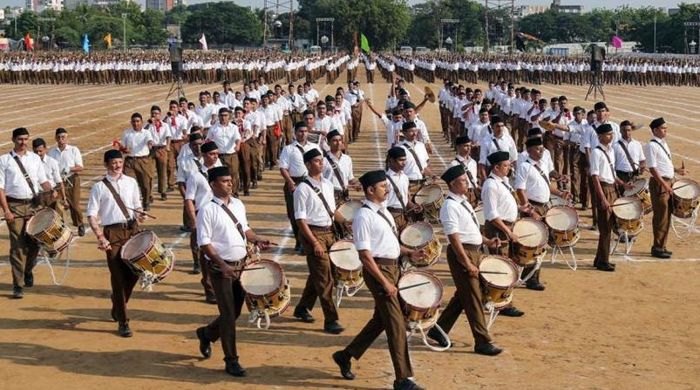
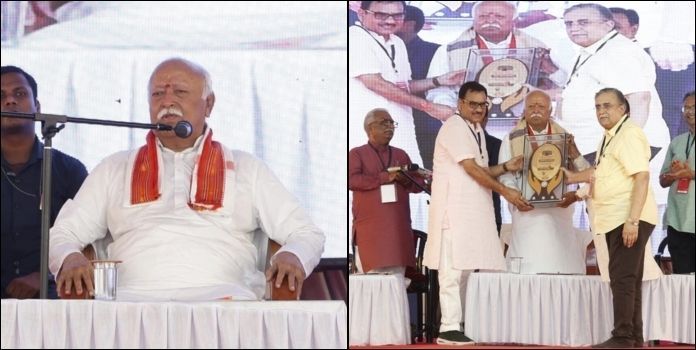
Across Bharat · 20 October · No. 01 Vijaya Dashami: the victory of Dharma Durga Puja ends in the east and south, Ramlila in the north and west, and the RSS marks its foundation day Vijaya Dashami, more commonly known as Dashahara, is observed on Shukla Dashami of the month of Ashwin, this year on 20 October. In the southern, eastern, northeastern and some northern states of Bharat, Vijayadashami marks the end of Durga Puja, commemorating Maa Durga's victory over Mahishasura to restore and protect Dharma. In the northern, central and western states, it marks the end of Ramlila and commemorates Bhagwan Rama's victory over Ravana. Kullu Dashahara in Himachal Pradesh and Mysore Dashahara in Karnataka are among the most famous traditional celebrations of the day. The RSS also celebrates Vijaya Dashami as its foundation day. Every year on this day, the Sarsanghchalak of the Rashtriya Swayamsevak Sangh addresses swayamsevaks from Nagpur. Shakhas celebrate with ghosh-pathsanchalans, shastra pujas and baudhiks, to which eminent personalities and people from all walks of life are invited. |
| Sangh संघ | Organisation | | 05 dispatches |
|
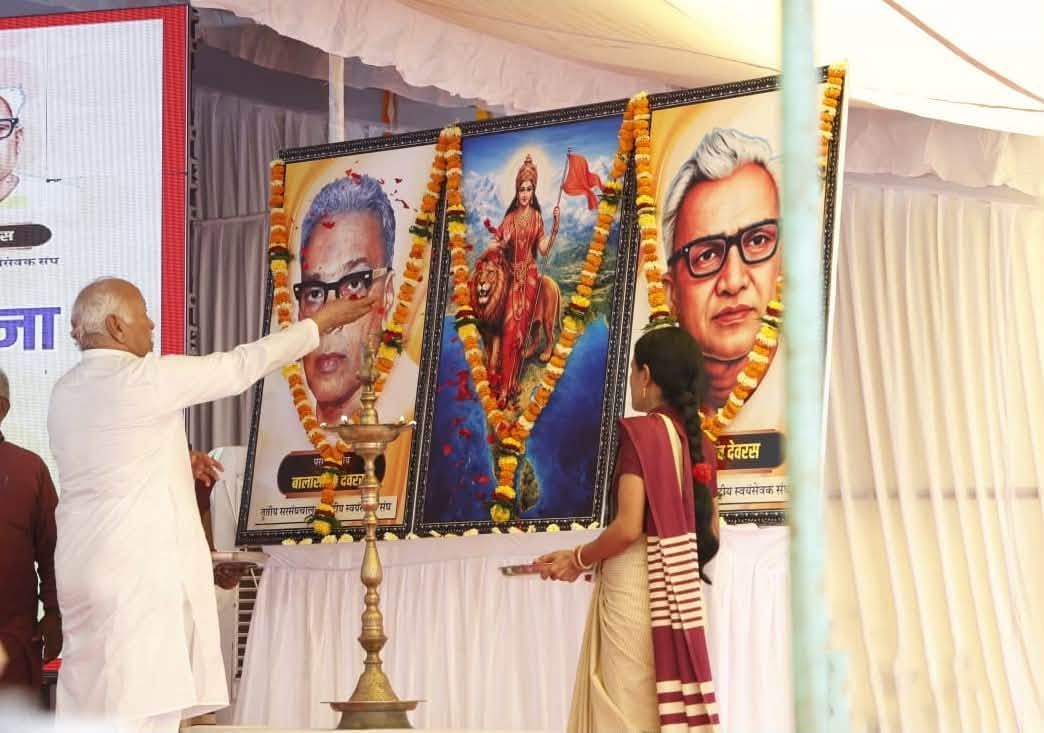
Smriti Bhavan, Karanja, 6 October |
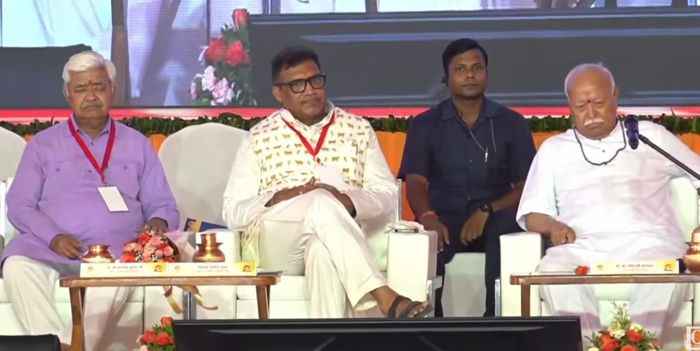
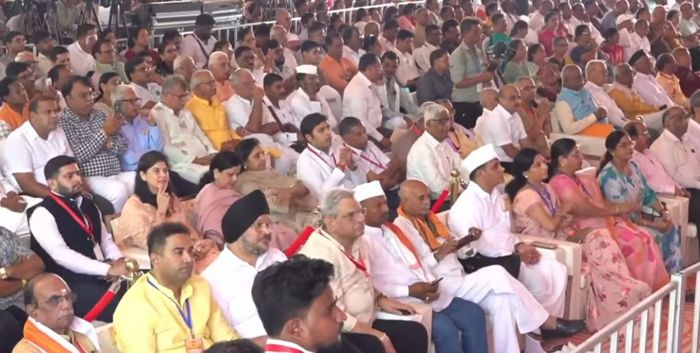
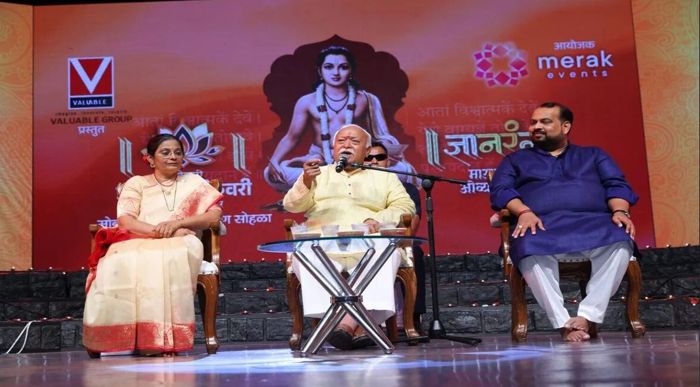
Karanja · Nagpur · Mumbai · 2–7 October · No. 02 Sarsanghchalak Dr Mohan Bhagwat at Karanja, Nagpur and Mumbai A Smriti Bhavan and eye hospital in the Deoras family's ancestral village, the Ashok Singhal centenary in Nagpur, and a Dnyaneshwari app for the young On 6 October, RSS Sarsanghchalak Dr Mohan Bhagwat inaugurated the newly built Smriti Bhavan and Madhav Netralaya in Karanja, Balaghat, the ancestral village of the RSS's third Sarsanghchalak Balasaheb Deoras and senior pracharak Bhaurao Deoras. Explaining the role of the RSS, Dr Bhagwat said the organisation works to develop good qualities in people, strengthen their organisational abilities and inspire devotion to the motherland, encouraging them to consider everyone their own and to cultivate a spirit of service. He cited the courage of Flydubai Captain Smit Machchhar, who risked his own life to keep his passengers safe, placing the lives of others above his own. A large crowd of citizens, RSS office-bearers and karyakartas attended. Madhav Netralaya will provide eye check-ups and treatment for people across the region. On 7 October, as part of the year-long birth centenary celebrations of VHP leader Ashok Singhal, a programme was held in Nagpur. Dr Bhagwat said society must act together and carry forward Ashok Singhal's legacy through concrete action, and also remembered senior pracharak Moropant Pingle: "Ashok Ji and Moropant Ji had immense accomplishment, extraordinary judgement, unparalleled courage and deep sensitivity to the suffering of others." VHP International Working President Alok Kumar also addressed the gathering, which stood in tribute to Sant Ramesh Baba Ji Maharaj, who dedicated his life to Gau Sewa and Raksha and passed away on 6 October. Five projects were inaugurated at the Go-Vigyan Anusandhan Kendra, Deolapar, as part of the centenary year. To commemorate the 750th birth anniversary year of Sant Dnyaneshwar Maharaj, 'Dnyanrang: A Celebration of Mauli's Ovis' was held in Mumbai on 2 October. Dr Bhagwat said that life in the world is eternal, and the Dnyaneshwari teaches us how to look at the world and understand life. To carry this legacy to the younger generation through modern media, the 'Dnyanrang: Dnyaneshwari' mobile app was launched on the occasion, bringing together devotion, knowledge and technology. The event was organised by Valuable Group and Merak Events. | Dr Mohan Bhagwat “Ashok Ji and Moropant Ji had immense accomplishment, extraordinary judgement, unparalleled courage and deep sensitivity to the suffering of others.” |
|
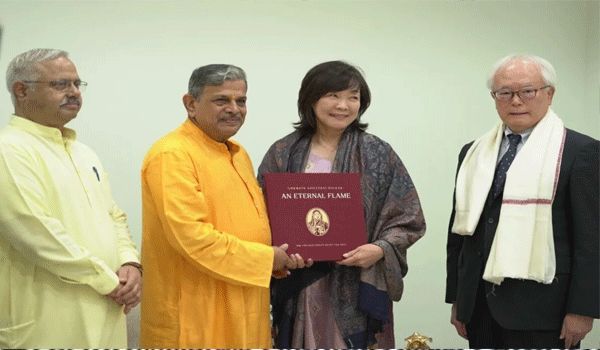
At the RSS office, New Delhi, 8 October | New Delhi · 8 October · No. 03 Akie Abe meets the Sarkaryavah The widow of former Japanese Prime Minister Shinzo Abe and Nippon Kaigi's chairman discuss civilisational bonds between Bharat and Japan Akie Abe, wife of the late former Japanese Prime Minister Shinzo Abe, and Tomohiko Taniguchi, Chairman of Nippon Kaigi, a prominent Japanese non-governmental organisation, met RSS Sarkaryavah Dattatreya Hosabale at the RSS office in New Delhi on 8 October. Akhil Bharatiya Prachar Pramukh Sunil Ambekar was also present. The meeting featured a cordial and substantive exchange of views on strengthening Bharat–Japan relations, with particular emphasis on civilisational bonds, cultural cooperation and people-centric initiatives. Mrs Abe, who is also Chairperson of the Foundation for Social Contribution, and Mr Taniguchi expressed a shared interest in deepening engagement between the two countries. The RSS leadership, the Foundation for Social Contribution and the Nippon Kaigi delegation agreed to strengthen the cultural ties between Bharat and Japan. |
|
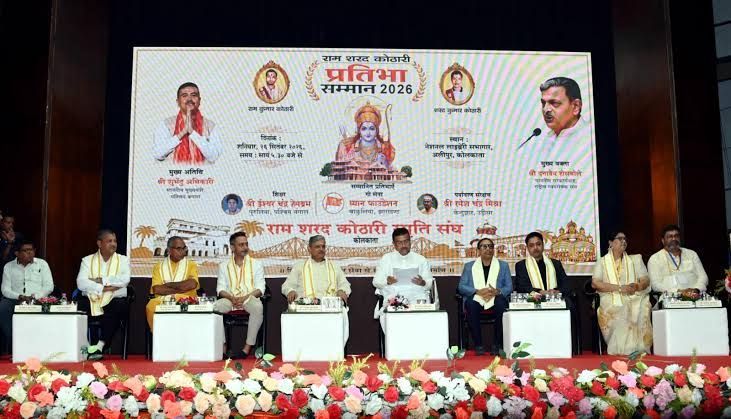
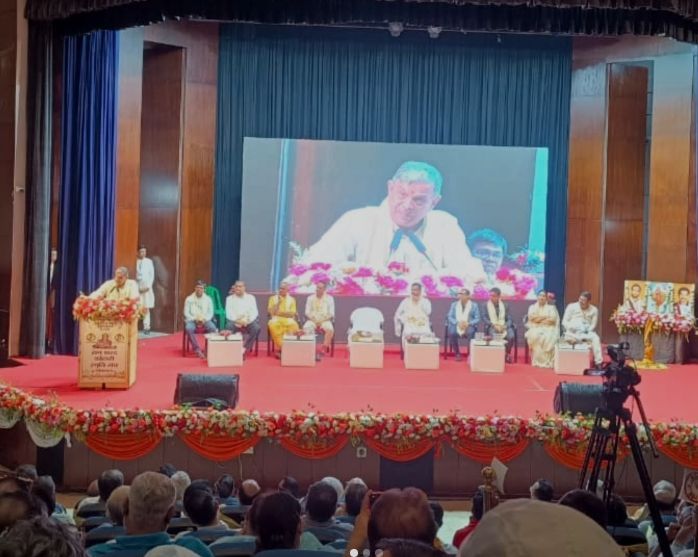
| Kolkata · 26 September · No. 04 Ram-Sharad Kothari Pratibha Samman 2026 The Sarkaryavah honours the kar-sevak brothers killed in Ayodhya in 1990, and the people carrying their memory into social work "The sacrifice of Ram and Sharad Kothari continues to inspire people to work for the nation and society, while the social service initiatives undertaken in their memory are also worthy of appreciation," RSS Sarkaryavah Dattatreya Hosabale said on 26 September. "Paying tribute to their sacrifice should inspire society to undertake constructive and developmental work." He was addressing the annual Ram-Sharad Kothari Pratibha Samman 2026, organised by the Ram-Sharad Kothari Smriti Sangha in Kolkata to honour individuals and organisations making notable contributions to social development. West Bengal Chief Minister Suvendu Adhikari also spoke. Ram and Sharad Kothari were RSS swayamsevaks and kar-sevaks in the Ram Janmabhoomi movement in Ayodhya in 1990. On 2 November that year, they were among the kar-sevaks killed in police firing. “Paying tribute to their sacrifice should inspire society to undertake constructive and developmental work.” — Dattatreya Hosabale |
|
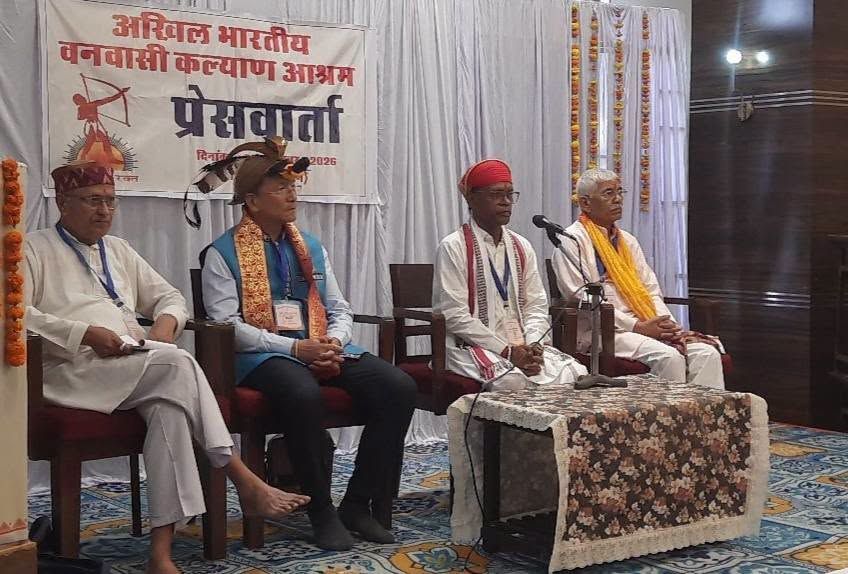
| Bhilwara · 2–3 October · No. 05 Vanvasi Kalyan Ashram seeks a national memorial at Mangarh Dham The Central Executive Committee remembers the 1,500 janjati men, women and children killed by British firing in 1913 The Central Executive Committee of the Akhil Bharatiya Vanvasi Kalyan Ashram met on 2 and 3 October in Bhilwara, Rajasthan, in the presence of Nimbarkacharya Peethadhishwar Anant Vibhushit Shri Shyamsharandevacharya Ji Maharaj. More than 300 prant-level office-bearers and national representatives attended. The committee passed a resolution demanding that Mangarh Dham be declared a National Memorial to honour the janjati communities and martyrs of the massacre of 17 November 1913. The resolution recalled that the British Government opened fire at Mangarh Dham to crush the Bhagat Movement led by Sant Govind Guru of the Vagad region, killing more than 1,500 janjati women, men and children. The incident remains an important chapter in the janjati community's sacrifice in the freedom struggle. 300+ office-bearers at Bhilwara | 1,500+ janjati martyrs at Mangarh, 1913 |
|
|
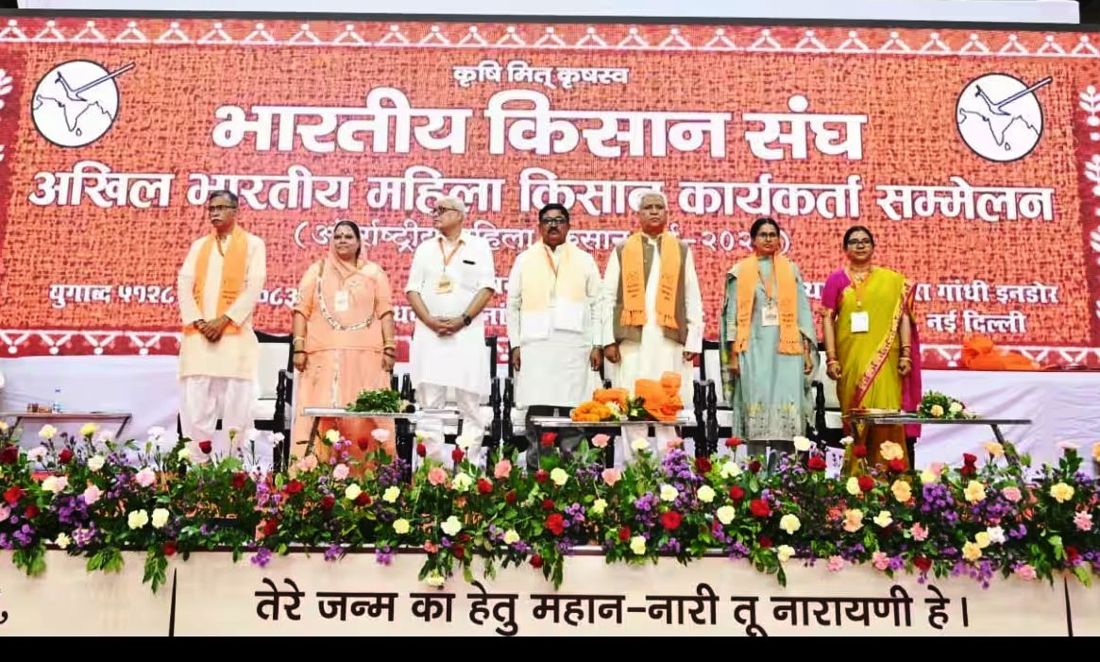
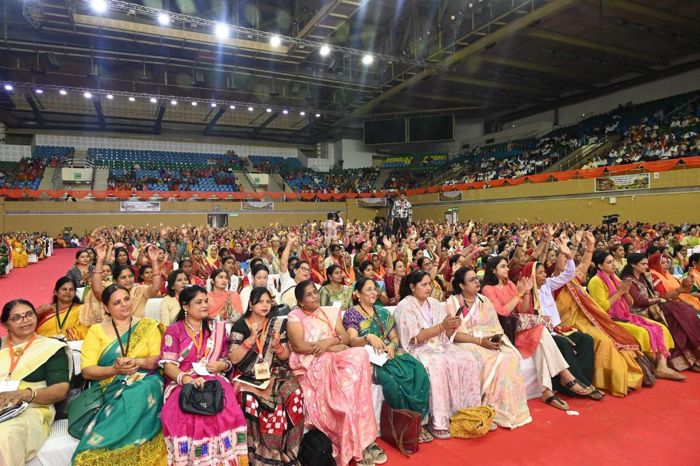
| New Delhi · 30 September · No. 06 Women farmers at the Bharatiya Kisan Sangh sammelan Thousands gather for the Akhil Bharatiya Mahila Kisan Sammelan; three women honoured for Gau-Krishi-Vanijyam, organic farming and seed conservation The Bharatiya Kisan Sangh organised the Akhil Bharatiya Mahila Kisan Sammelan in New Delhi on 30 September, attended by thousands of women farmers from across Bharat. In her keynote, BKS Akhil Bharatiya Mahila Samyojak Manju Dixit said women farmers are contributing more and more to the economic development of their families and the country. At the concluding session, BKS Akhil Bharatiya General Secretary Mohini Mohan Mishra said that building a developed and healthy Bharat by 2047 would need greater emphasis on 'Gau-Krishi-Vanijyam'. The conference recognised women farmers for their work across agriculture and rural enterprise, among them Sunanda Saysing of Maharashtra for Gau-Krishi-Vanijyam, Deepali Oraon of West Bengal for organic farming and Kamala Ben of Gujarat for seed conservation. BKS Akhil Bharatiya Organising Secretary Dinesh Kulkarni, RSS Akhil Bharatiya Sampark Pramukh Ramlal and Rashtra Sevika Samiti Akhil Bharatiya Sah Sampark Pramukh Ritu Sharma were among the dignitaries. |
|
| Vishwa विश्व | Bharatiya diaspora | | 04 dispatches |
|
|
|
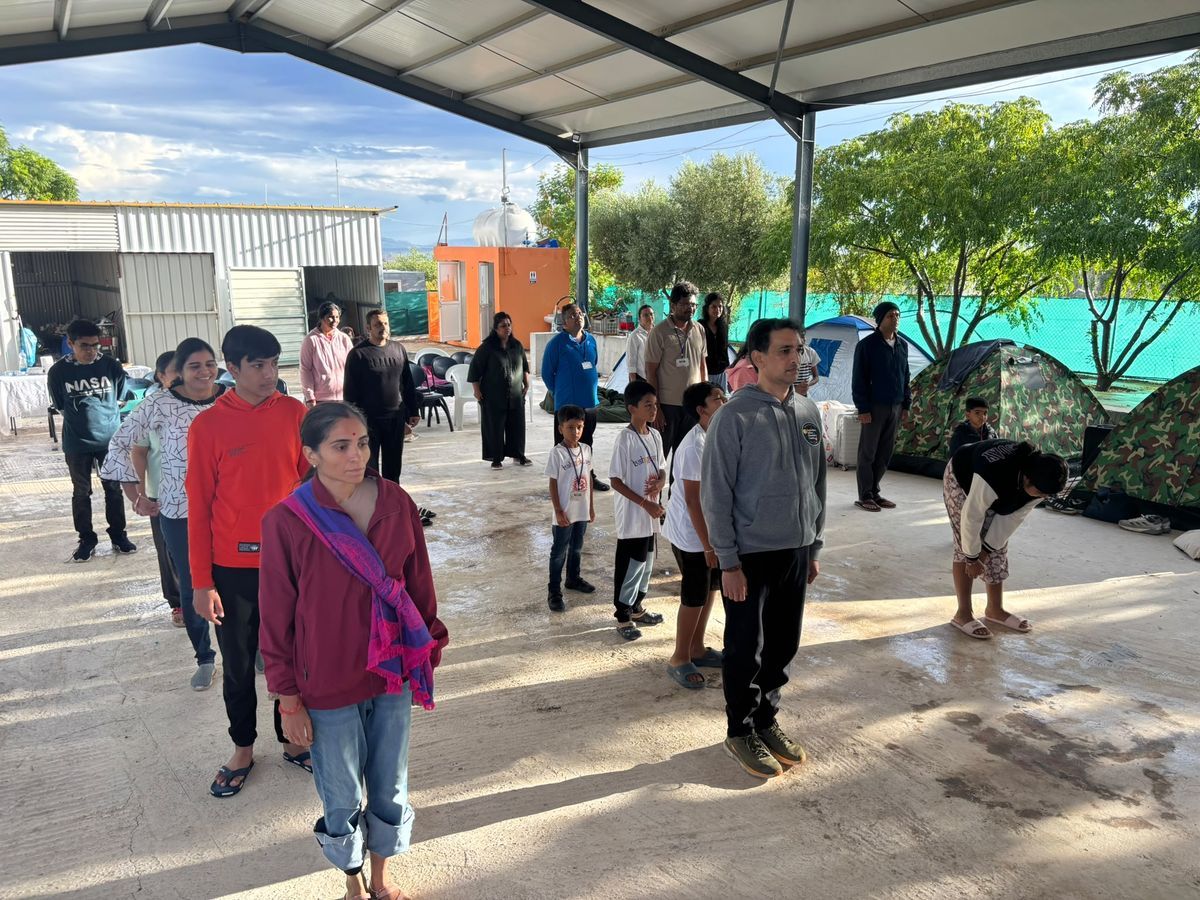
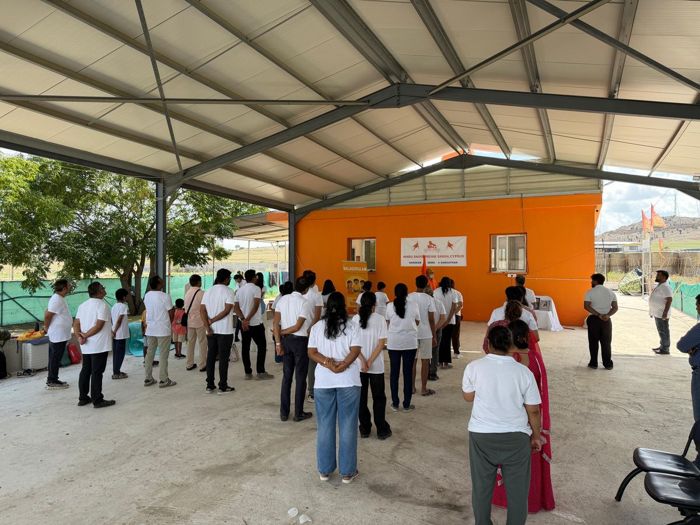
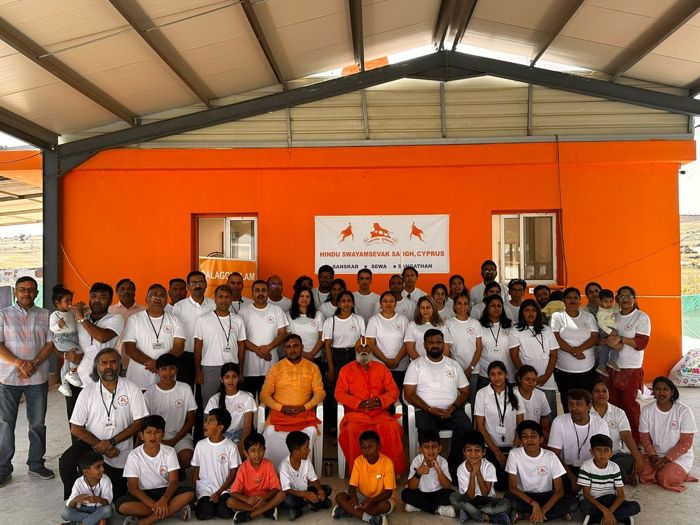
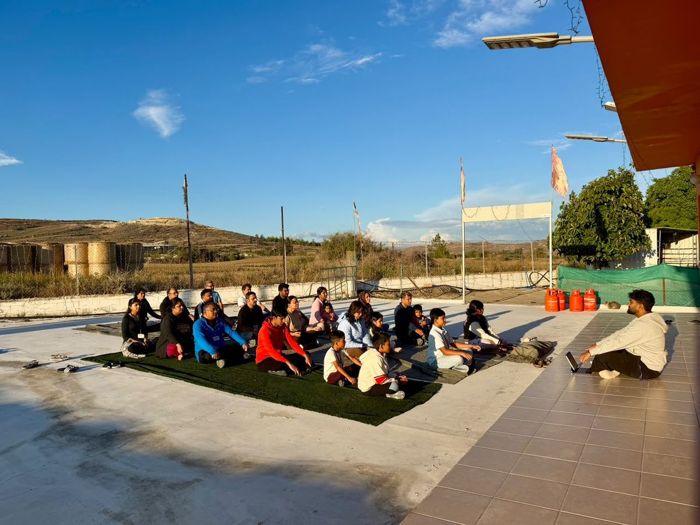
Larnaca · 2–4 October · No. 07 The first HSS Shibir in Cyprus Forty-one shibirarthis, three trainers from Norway, and a resolve that this is a beginning Hindu Swayamsevak Sangh Cyprus held its first three-day shibir from 2 to 4 October at the Shiv Mandir, Athienou, Larnaca, to impart the values of Sangathan, Sewa and Sanskar. Forty-one shibirarthis and four vyavastha karyakartas came together with one spirit, one purpose and one commitment to the community. Three prashikshit karyakartas travelled from Norway and gave five days to support the shibir. The shibir focused on Sangh paddhati, shakha, karyakarta development and teamwork. Each day ran through morning shakha, khel, samata, mahakhel, baudhik sessions and discussions on Hindu Dharma, festivals, sanskar and cultural responsibilities. On the concluding day, members of the wider samaj were invited to see the dedication and discipline of the swayamsevaks and sevikas. Participants resolved that this first shibir is not an end but the beginning of a new chapter for HSS Cyprus. 41 shibirarthis | 3 trainers from Norway | 1st HSS shibir in Cyprus |
|
| America Zone 02 dispatches |
|
| Surprise, Arizona · September · No. 08 HSS Arizona at the Interfaith Golden Rule Breakfast Namaste as the Golden Rule: HSS speaks for the Hindu community alongside the Governor's office and county leaders Hindu Swayamsevak Sangh USA, Arizona, represented the Hindu community at the annual Interfaith Golden Rule Breakfast hosted by the City of Surprise in September. The gathering brought together representatives of diverse faith traditions, reaffirming a shared commitment to mutual respect, harmony and service, with participation from the offices of Arizona Governor Katie Hobbs, Congressman Paul Gosar, and Debbie Lesko of the Maricopa County Board of Supervisors. HSS shared timeless messages from Hindu Dharma — "Do not do to another what you would consider harmful if done to you" from the Mahabharata, and Vasudhaiva Kutumbakam, the whole world is one family — and reflected on how the simple greeting 'Namaste' embodies the Golden Rule, honouring the divine within every individual. Government representatives and HSS agreed that such events strengthen community bonds and remind us that compassion, respect and unity transcend all traditions. |
|
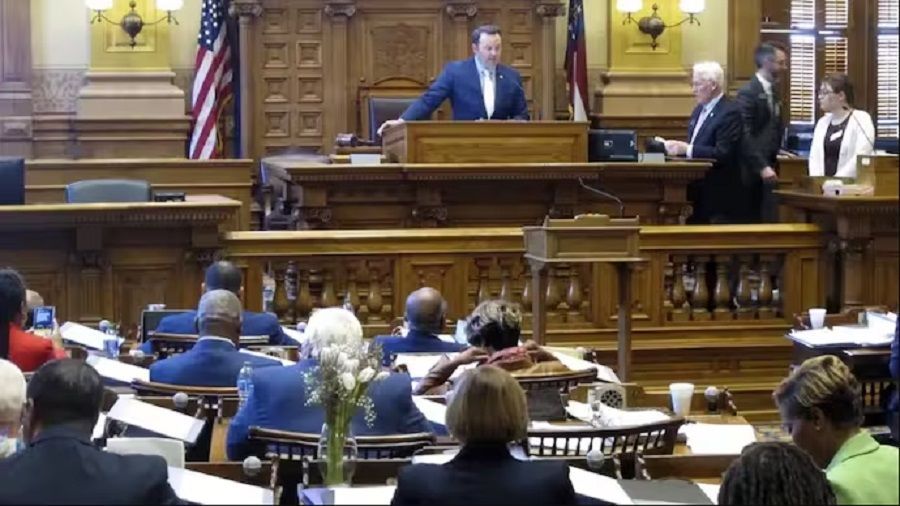
| Atlanta, Georgia · No. 09 Georgia passes the first county resolution condemning Hinduphobia Forsyth County's delegation, home to one of Georgia's largest Hindu communities, calls for an end to anti-Hindu hate History was made in Georgia, and in the United States, when the first-ever county resolution condemning Hinduphobia and anti-Hindu hate was passed recently in the Georgia legislature. The resolution was led by Rep. Lauren McDonald and Rep. Todd Jones of Forsyth County, in the Atlanta suburbs, home to one of the largest Hindu and Bharatiya American communities in the state. The delegation drew attention to rising Hinduphobia across the nation and called for an end to such hatred. The Atlanta chapter of the Coalition of Hindus of North America (CoHNA) spearheaded the effort, with local leaders from BAPS, Hindu Swayamsevak Sangh, Umiya Mata Mandir, Shree Shakti Mandir, Sewa International, Vishwa Hindu Parishad of America and others. |
|
| Australasia Zone 01 dispatch |
|
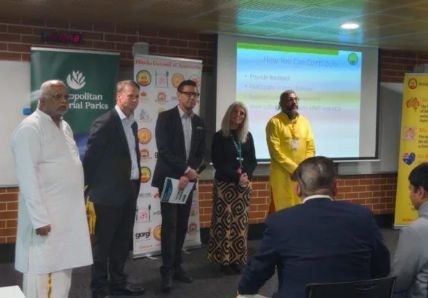
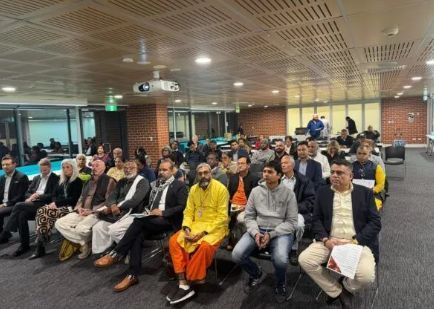
| Sydney · No. 10 A Hindu chapel for final rites at Rookwood After years of advocacy, Hindu families in New South Wales can hold havan and cremation ceremonies at All Souls Chapel The Hindu Council of Australia (HCA) held a community information session for Hindu families, community leaders, clergy and funeral service providers on a significant development in New South Wales. Following years of advocacy, approval has been granted to use All Souls Chapel at Rookwood Memorial Gardens and Crematorium, Strathfield, for Hindu funeral and cremation ceremonies, including havan and other important final rites. HCA representatives explained the facilities and the processes for conducting Hindu funerals there. HCA welcomed Metropolitan Memorial Parks' decision as a positive step towards cultural inclusion, and encourages families, funeral directors, temples and community organisations to consider All Souls Chapel for Hindu final rites — so that Hindu Australians can farewell their loved ones with dignity and full observance of their traditions. |
|
| Seva सेवा | Relief work | | 03 dispatches |
|
|
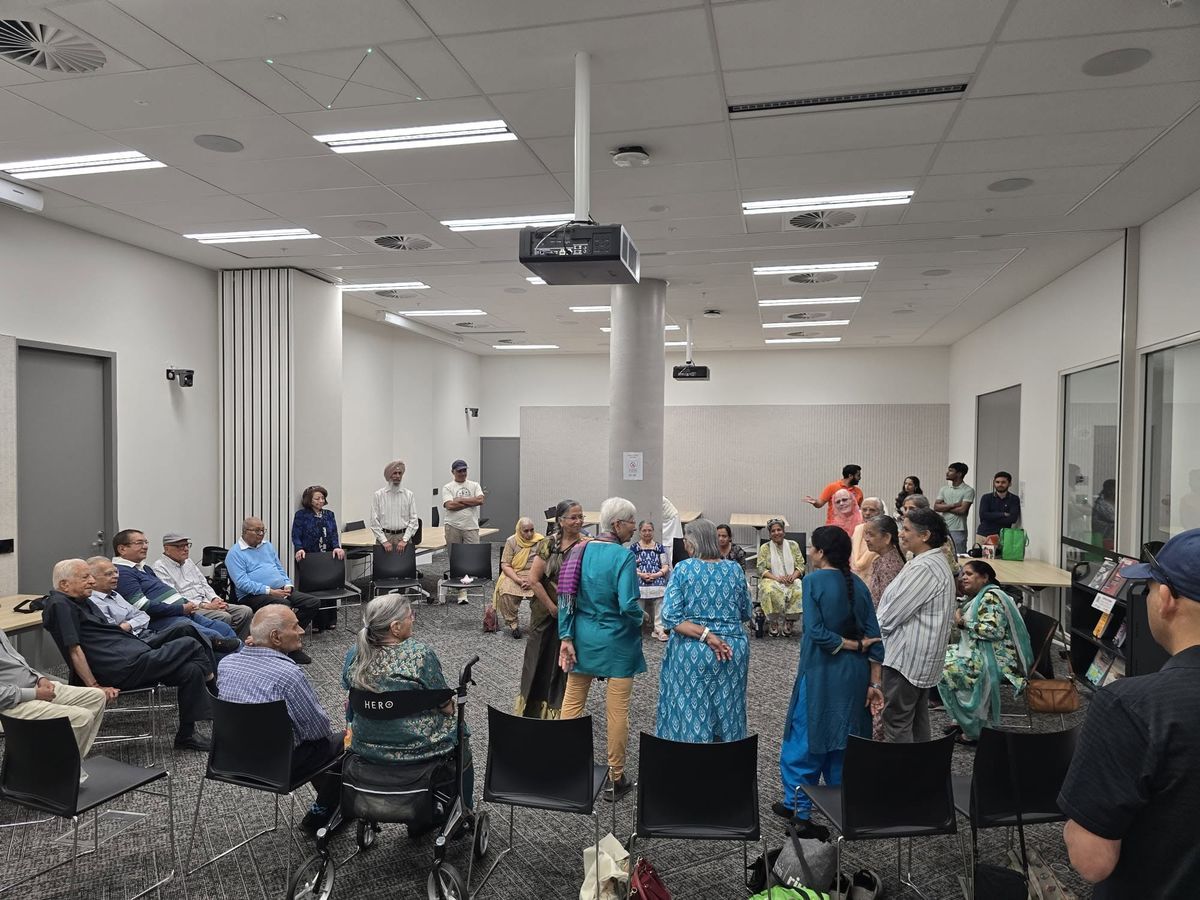
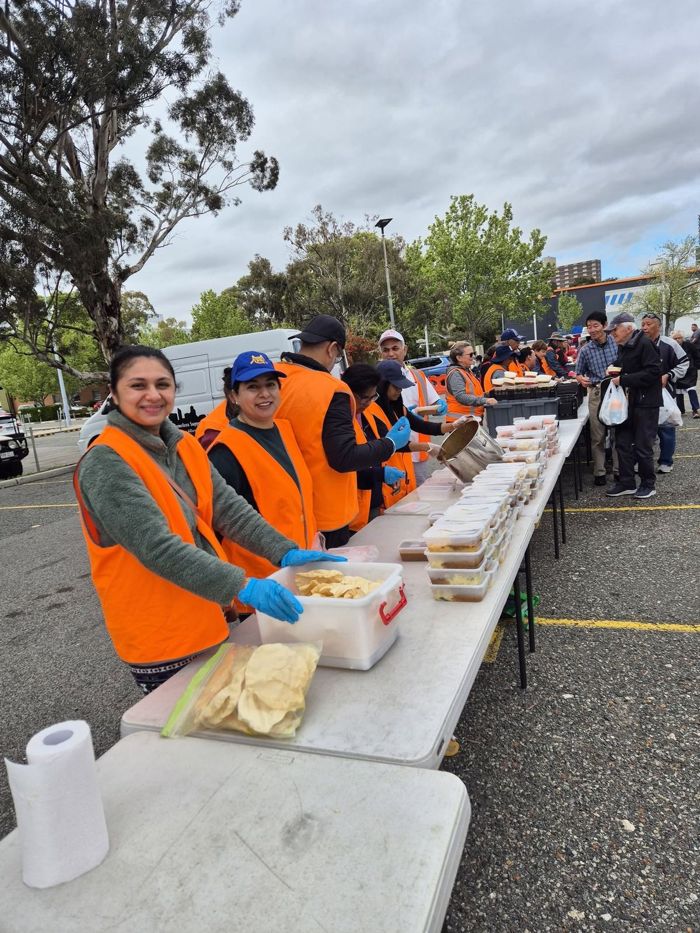
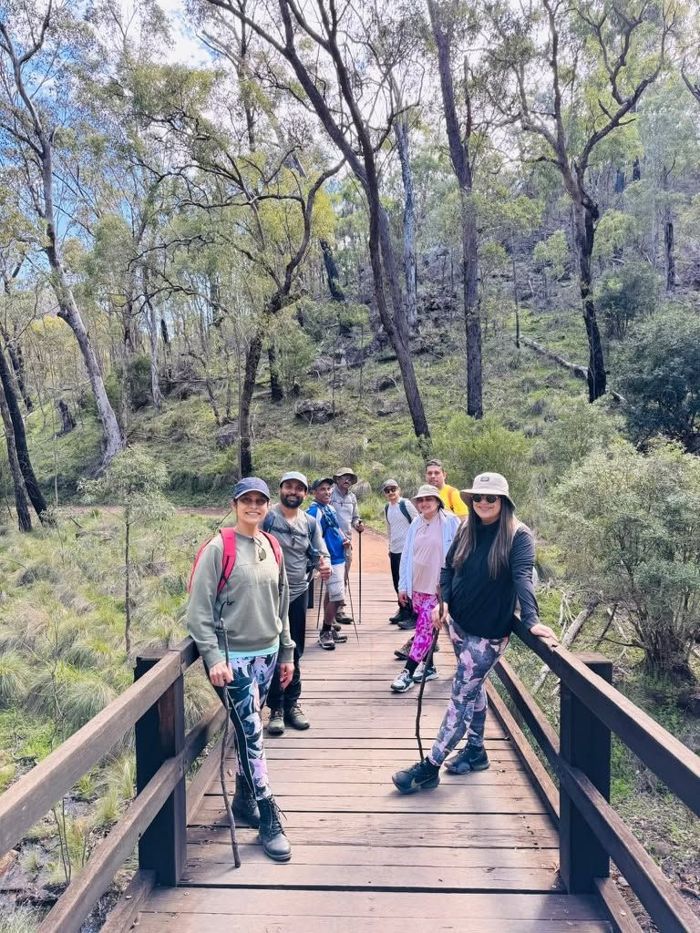
Perth · September · No. 11 Sewa Australia: seniors, 250 meals and a hike for mental health A Senior Milan with Bharatanatyam and rakhis, a community food service, and a walk to break the stigma around men's mental health Sewa Australia held a Senior Milan in Perth on 5 September, where 38 seniors and volunteers spent an afternoon of culture, laughter and celebration: a Bharatanatyam performance by Priya and Shishira, karaoke by Sathya and Supriya, games led by Chechi, and Raksha Bandhan with the Brahmakumari sisters. Anagan Babu of Chennai Kitchen served a homemade eggless cake. Sewa recognised the youth volunteers who made it possible — Yadhunandan, Yashwanth, Supriya, Karthik, Shishira and Priya — with certificates, letters of appreciation and mementos. On 27 September, ten Sewa volunteers packed 250 boxes of nourishing meals — rice, dal, chana, fried rice, papadam, pasta and noodles — for the community food service, every step done with love and care in the spirit of selfless service. In the last weekend of September, Sewa Perth also organised a 'Hike for a Cause' for men's mental health. From the iconic paths to the peaks of the Grand High Tops, every step was a step towards breaking the stigma, starting vital conversations and raising awareness of men's mental wellbeing. 38 at the Senior Milan | 250 meals packed | 10 food-service volunteers |
|
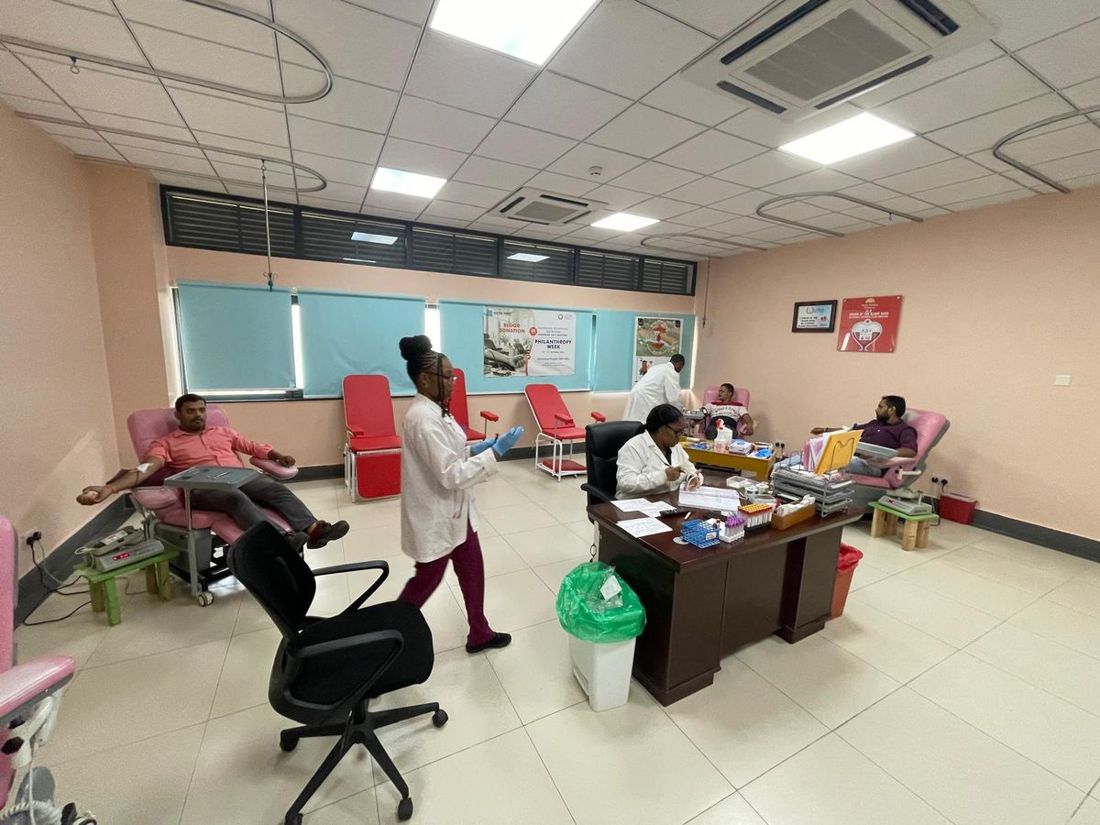
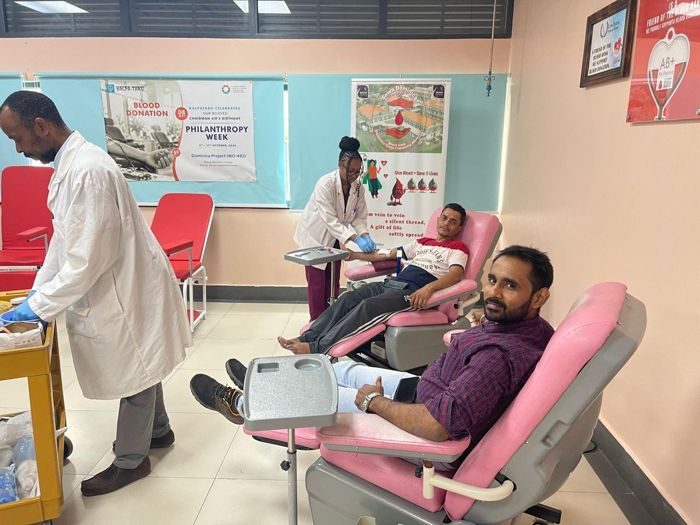
| Dominica · 5 October · No. 12 Sewa Dominica's sixth blood drive Eighteen donors in a single day at the Dominica China Friendship Hospital, during Sewa Pakhwada Sewa Dominica has completed its sixth successful blood donation campaign, with 18 donors in a single day on 5 October. The drive was held with the medical team of the Dominica China Friendship Hospital. Organised by the Sewa Dominica service group, it was part of Sewa Pakhwada, Sewa International's worldwide fortnight of community service. 18 donors in one day | 6th blood drive |
|
|
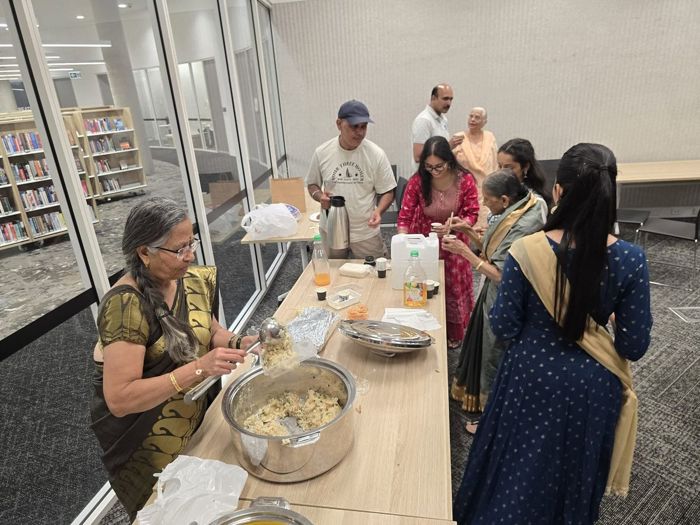
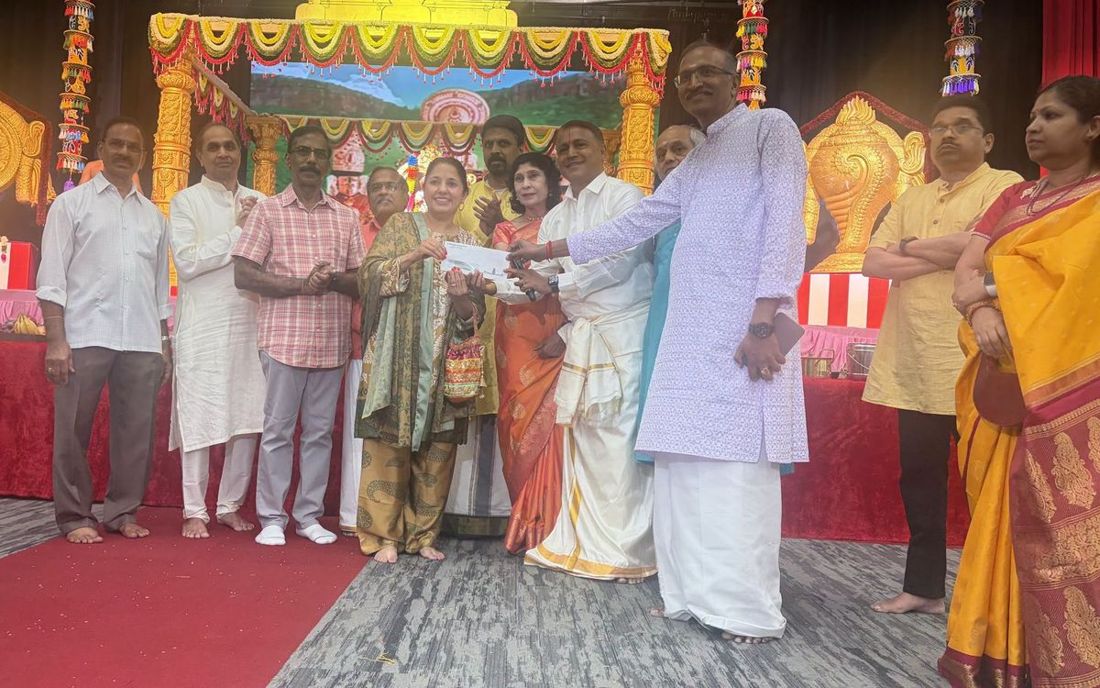
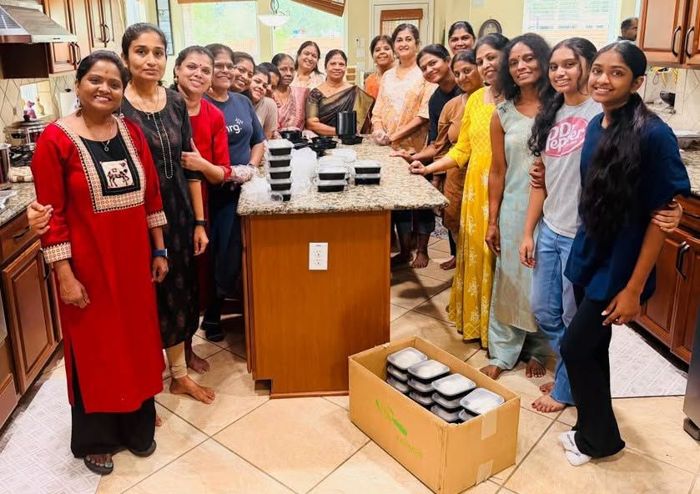
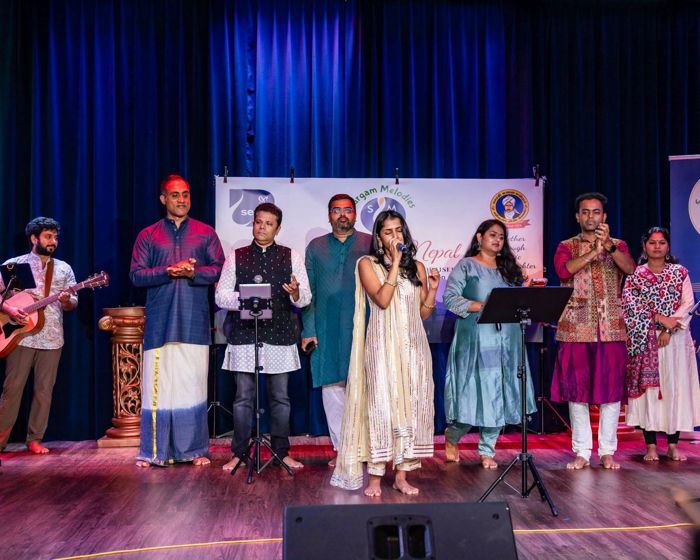
| Houston · September–October · No. 13 Houston raises $32,000 for Nepal A music evening, a Bhajagovindam and a 'Brunch for a Cause' — three community fundraisers for Sewa's flood relief Three community-led fundraisers across Greater Houston, initiated by Sewa International USA's Houston chapter, raised more than $32,000 for Sewa's Nepal Flood Relief and Rehabilitation work. Sargam Melodies, with Bharathi Kalai Manram and Shri Krishna Vrundavana, brought the community together for an evening of music and dinner, with performances in Hindi, Telugu, Kannada, Tamil and Malayalam raising more than $12,000; the contribution was received by Sewa Houston case manager Bharat Patel. A Bhajagovindam at Sri Meenakshi Temple, Pearland, drew more than 100 people and was followed by a $10,000 contribution. 'Brunch for a Cause' brought families, children, volunteers and local businesses together to cook idlis, vadas, chutneys, sambar and sweets, surpassing its $10,000 goal with every dollar going to Nepal. The support goes beyond immediate relief. As communities in Nepal move towards recovery and rebuilding, Sewa continues to support families on the ground; Sewa's Community Resilience Manager Tarvinder Taneja shared updates on that work. $32,000+ raised for Nepal | 3 community fundraisers | 100% of brunch proceeds to relief |
|
|
| Rashtra राष्ट्र | Bharat | | 02 dispatches |
|
|
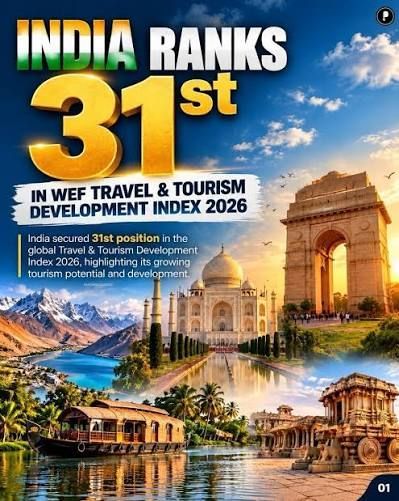
World Economic Forum · 25 September · No. 14 WEF tourism index: Bharat climbs nine places to 31st Better infrastructure, rich cultural resources and business travel lift Bharat among 110 economies; sixth in the world for heritage sites Bharat has moved up nine places to 31st among 110 economies in the World Economic Forum's 2026 Travel & Tourism Development Index (TTDI), released on 25 September, reflecting improvements in tourism infrastructure, cultural resources and business travel facilities. Japan topped the global ranking. The TTDI, prepared by the WEF with Zurich Insurance Group, evaluates the conditions and policies that enable sustainable and resilient development of travel and tourism. According to the report, Bharat combines a highly cost-competitive travel environment with rich cultural resources, abundant natural assets and well-distributed tourism demand. Bharat ranks sixth globally for its number of World Heritage properties, the highest in South Asia. 31st of 110 economies | +9 places from last edition | 6th for World Heritage properties |
|
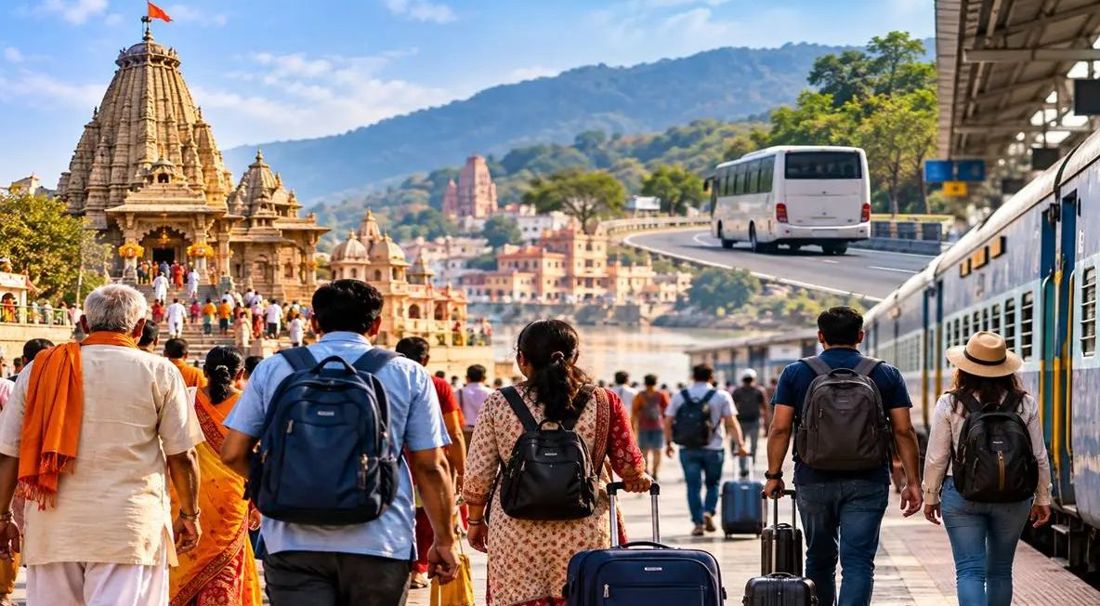
| Across Bharat · July 2025 – June 2026 · No. 15 Nearly half of Bharat's overnight trips are for pilgrimage The Domestic Tourism Expenditure Survey finds religion, not holidays, drives domestic travel Bharat's latest Domestic Tourism Expenditure Survey shows that 47.7 per cent of overnight trips taken in the previous 365 days were for pilgrimage and religious purposes. The survey, conducted between July 2025 and June 2026, recorded the purpose of travel, transport, accommodation, trip duration and expenditure. Health and medical travel accounted for 29.6 per cent, holidaying, leisure and recreation for 22.1 per cent, and shopping for 0.6 per cent. In other words, the largest share of overnight domestic travel was not a traditionally perceived vacation. Among households that had taken at least one overnight trip, pilgrimage and religious travel generated an average of 62 overnight trips per 100 tourist households in rural areas and 61 in urban areas — a central part of Bharat's domestic movement rather than a small segment of the tourism market. 47.7% pilgrimage and religious | 29.6% health and medical | 22.1% holiday and leisure |
|
|
| Gaurav गौरव | Achievers | | 04 dispatches |
|
|
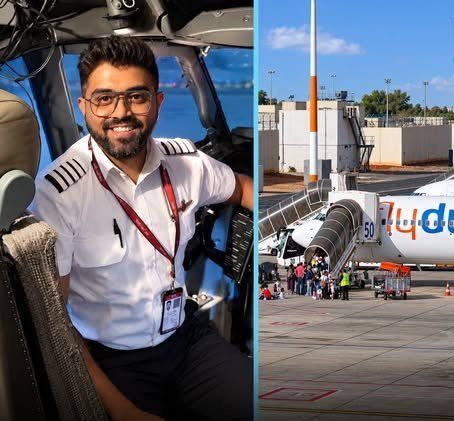
Flydubai FZ1073 · 30 September · No. 16 Bharatiya pilot helps avert disaster Captain Smit Machchhar, attacked in the cockpit and gravely injured, opens the door so passengers can overpower his assailant; 174 people land safely Bharatiya pilot Captain Smit Machchhar saved 174 passengers and crew aboard Flydubai flight FZ1073 from Dubai to Tel Aviv on 30 September. During the flight, the first officer, Hamam al-Hammami, of Omani origin, attacked Captain Machchhar inside the cockpit, sending the aircraft into a rapid descent. Despite severe, life-threatening injuries including a skull fracture, Captain Machchhar managed to unlock and open the cockpit door. Passengers and crew, including Israeli passengers and off-duty pilots, stepped in to overpower the attacker, and the flight diverted safely to an emergency landing in Tabuk, Saudi Arabia. Captain Machchhar has been hailed as a hero by heads of state and others, including Rashtrapati Draupadi Murmu, Pradhan Mantri Narendra Modi, Israeli Prime Minister Benjamin Netanyahu and US President Donald Trump, for preventing a potential 9/11-style catastrophe. 174 passengers and crew landed safely |
|
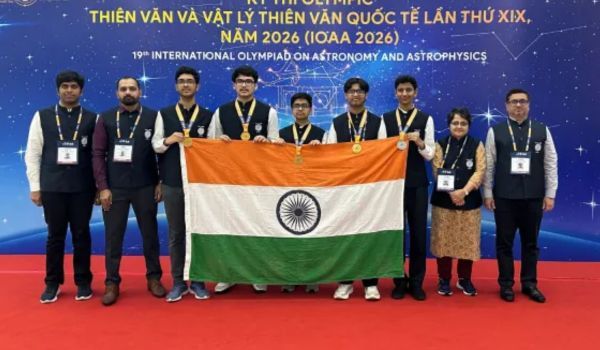
| Hanoi · 25 September – 5 October · No. 17 Four golds and a silver at the Astronomy Olympiad Every member of Bharat's team returns from the 19th IOAA with a medal; Bharat finishes joint third Bharat delivered a strong performance at the 19th International Olympiad on Astronomy and Astrophysics (IOAA) 2026 in Hanoi, Vietnam, from 25 September to 5 October, with all five members of the national team winning medals: four gold and one silver. Gold medals went to Pranjal Dixit of Hyderabad, Sumant Gupta of Delhi, Akshat Srivastava of Gurugram and Arnav Sehrawat of Faridabad; Harshil Amitkumar Patel of Vadodara won silver. Bharat finished joint third with Vietnam in the medal tally, behind Iran and South Korea, which won five golds each. With 307 students from 64 countries, this was the largest IOAA so far. The competition comprises theory, observation and data analysis, weighted 50, 25 and 25 per cent. 4 gold medals | 1 silver | 307 students from 64 countries |
|
|
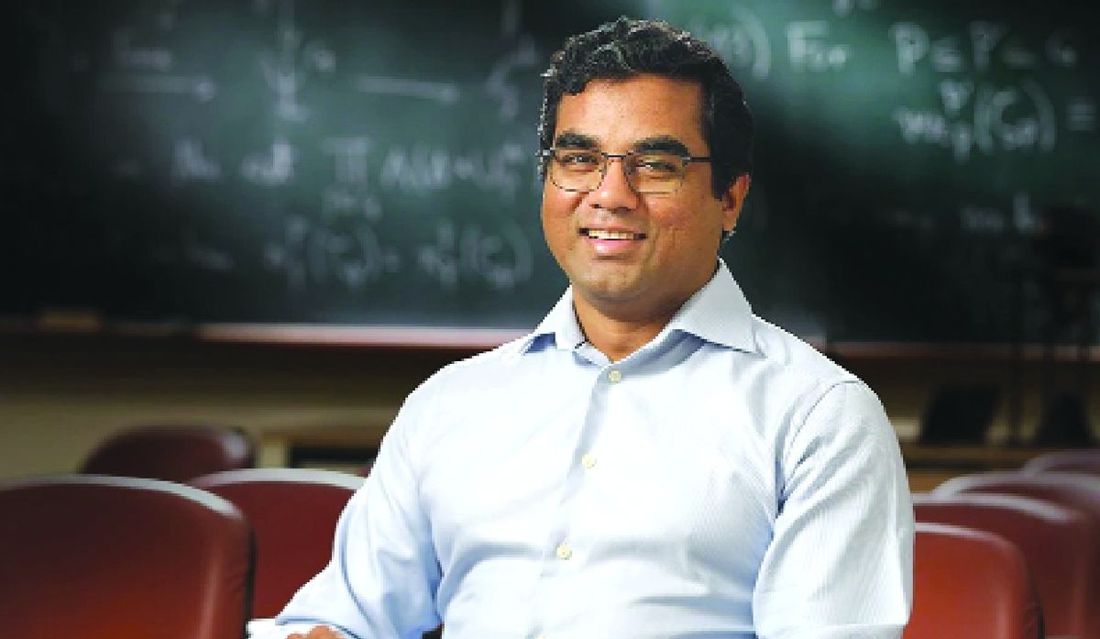
| ICTP and IMU · 30 September · No. 18 Prof. Mahesh Kakde wins the Ramanujan Prize The IISc mathematician is recognised for fundamental work in algebraic number theory Bharatiya mathematician Professor Mahesh Kakde was awarded the 2026 Ramanujan Prize for Young Mathematicians from Developing Countries on 30 September by the Abdus Salam International Centre for Theoretical Physics (ICTP) and the International Mathematical Union (IMU). The prize, established in 2005, recognises mathematicians under 45 who have done outstanding research while working in developing countries, and carries a $10,000 award. Prof. Kakde, of the Indian Institute of Science, Bengaluru, was recognised for fundamental work in algebraic number theory, particularly for solving important problems about how numbers behave and how different mathematical structures connect. Born and educated in Bharat, he completed his Bachelor of Mathematics at the Indian Statistical Institute, Bengaluru, then a master's and PhD in pure mathematics at Cambridge in 2008. He worked at Princeton University, University College London and King's College London before joining IISc in 2019. |
|
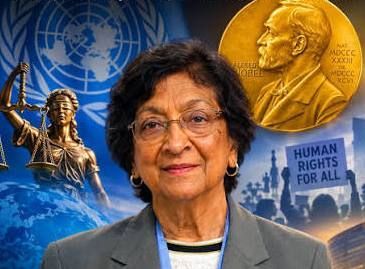
| Nobel Peace Prize · 9 October · No. 19 Navi Pillay, of Bharatiya origin, wins the Nobel Peace Prize The South African jurist who grew up under apartheid is honoured for her work on international law South African jurist of Bharatiya origin Navanethem "Navi" Pillay won the 2026 Nobel Peace Prize on 9 October for her efforts to promote peace and international law. She was UN High Commissioner for Human Rights from 2008 to 2014, and her work helped shape international law on genocide and sexual violence. The 85-year-old dedicated the award to survivors of international crimes and those defending international justice, saying their "compassion and courage continue to ensure that impunity will not be allowed to reign". Born in Durban on 23 September 1941 to Bharatiya parents of Tamil descent; her parents insisted that all their children should be educated in spite of being born in a poor family under apartheid. In 1995 she became the first woman of colour to serve as an acting judge of South Africa's High Court, and the same year was elected to the International Criminal Tribunal for Rwanda, where she served until 2003 and was its president from 1999. South African President Cyril Ramaphosa called the award a tribute to her courage, integrity and lifelong commitment to justice. “Their compassion and courage continue to ensure that impunity will not be allowed to reign.” — Navi Pillay |
|
| Pustak पुस्तक | Book | | 01 dispatch |
|
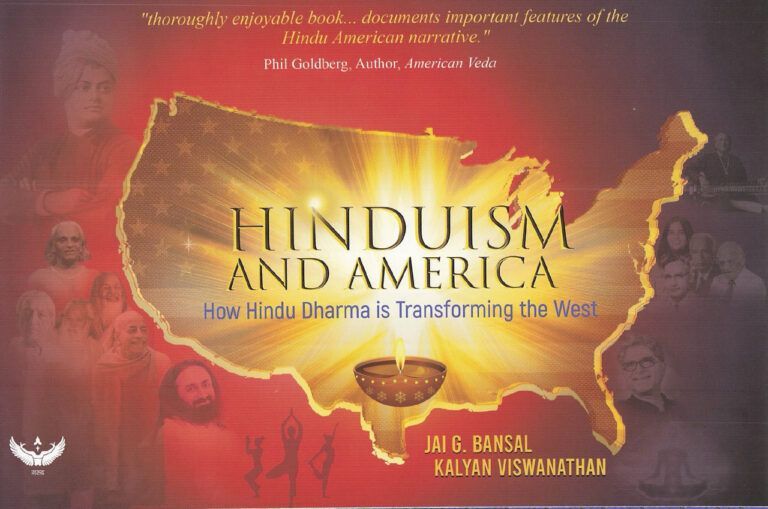
Hinduism and America: How Hindu Dharma is Transforming the West |
New book · No. 20 Hinduism and America A coffee-table history of 250 years of Hindu thought in the United States 'Hinduism and America' is a coffee-table book tracing a journey of nearly 250 years, from the arrival of early Sanskrit translations to the 20th-century influence of the swamis, yogis and spiritual teachers who brought Vedanta, yoga and other Hindu teachings to American soil. Written by Dr Jai G. Bansal and Kalyan Viswanathan, it has three parts: core Hindu social and cultural traditions and America; how Hindu thought influenced America; and the perspectives of contemporary Hindu Americans who have contributed to the country's multicultural landscape. It closes with the impact of today's Hindu citizens on American social and cultural life. As the introduction observes, nearly two-thirds of Americans, even while professing to be Christian, Jewish or just spiritual, now believe there are many equally valid paths to spiritual truth — a quintessential Hindu idea. |
| Aagami आगामी | Coming up | | 02 dispatches |
|
|
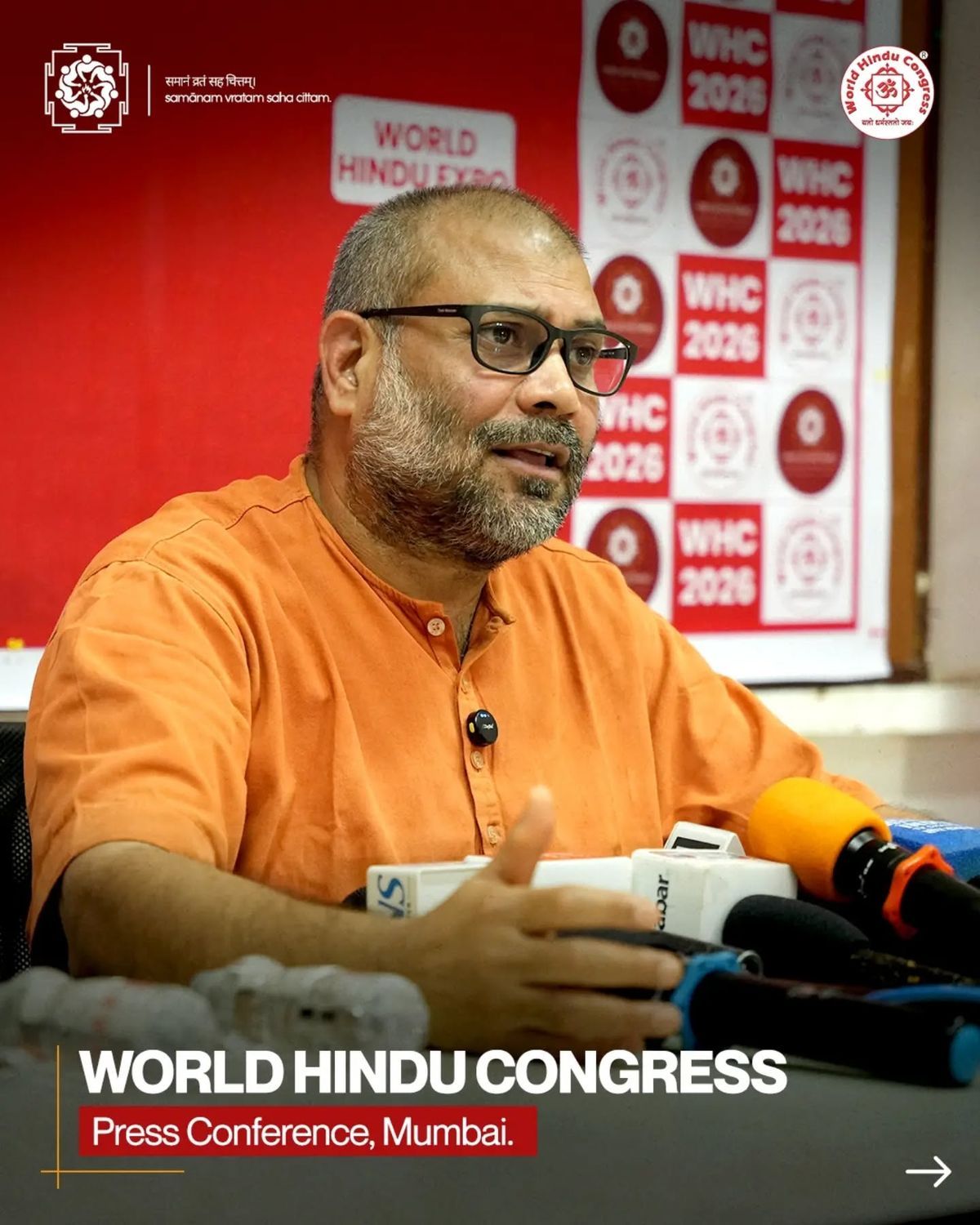
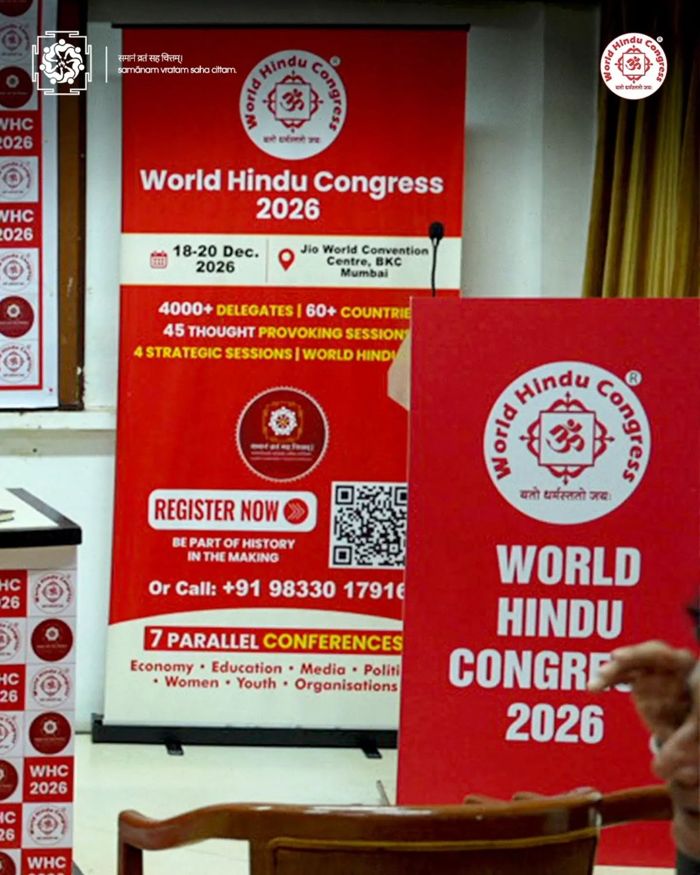
Mumbai · 18–20 December · No. 21 World Hindu Congress 2026 comes to Mumbai More than 4,000 delegates from 60 countries; Dr Mohan Bhagwat to address the inaugural session Mumbai will host the world's biggest gathering of Hindu leadership when the fourth World Hindu Congress (WHC) takes place on 18, 19 and 20 December 2026 at the Jio World Convention Centre, BKC. More than 4,000 delegates from over 60 countries are expected — leaders, thinkers, professionals and representatives of institutions from across the world. Sarsanghchalak Dr Mohan Bhagwat will address the inaugural session. The three days will feature more than 45 sessions and over 150 speakers across the economy, politics, education, youth, Hindu organisations, women and media. At a press conference on 8 October, WHC initiator Swami Vigyananand said there will be four special plenary sessions — Dharma, Samaj, Vishwakarma and Bhasha. The theme is "Samanam Vratam Saha Chittam — Shared Commitment, Collective Resolve". 4,000+ delegates | 60+ countries | 150+ speakers |
|
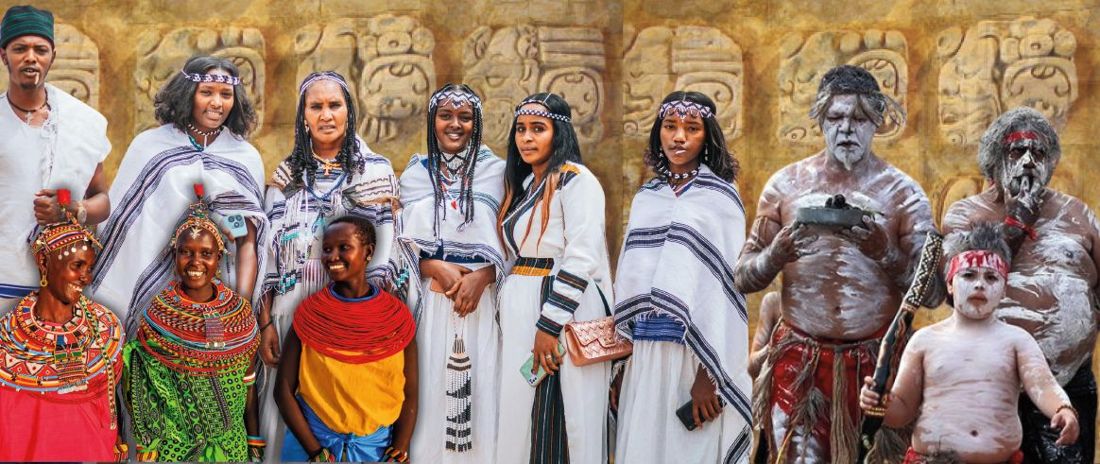
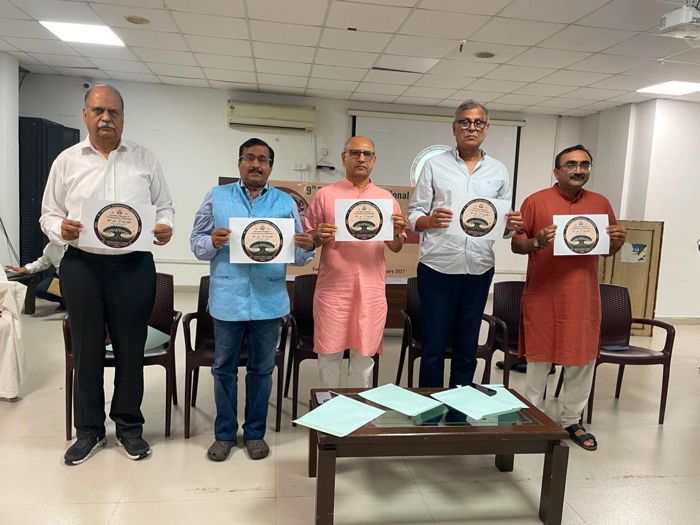
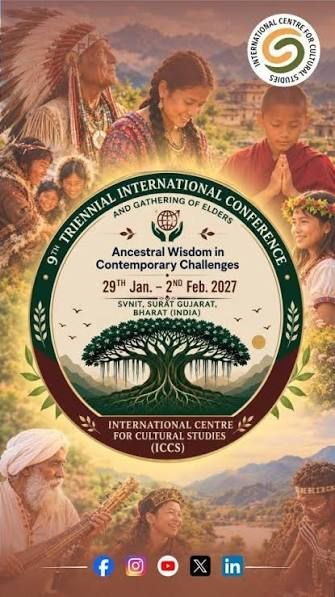
| Surat · 29 January – 2 February 2027 · No. 22 ICCS's 9th Triennial Conference and Gathering of Elders Elders of more than 70 living ancient traditions from 50 countries will meet at SVNIT, Surat The triennial conferences of the International Centre for Cultural Studies (ICCS) are among the most significant inter-civilisational gatherings in the world, bringing together elders, practitioners, scholars and cultural ambassadors from more than 50 countries and over 70 living ancient traditions — indigenous communities from Africa, Asia, Australia, Europe, New Zealand, the Americas and the Pacific Islands. Held eight times since its first edition in Mumbai in 2003, the ninth conference will take place at the Sardar Vallabhbhai National Institute of Technology, Surat, Gujarat. It will feature plenary sessions, panel discussions, workshops and displays of rituals and cultural practices, with knowledge shared on anthropology, philosophy, archaeology, community living, folk traditions, indigenous medicine, language preservation and environmental practice. The conference logo was released on 21 July in the presence of NIT Surat Director Dr Anurag Shukla, ICCS General Secretary Prof. Amarjiva Lochan and other senior adhikaris. 50+ countries | 70+ living traditions | 9th edition since 2003 |
|
|
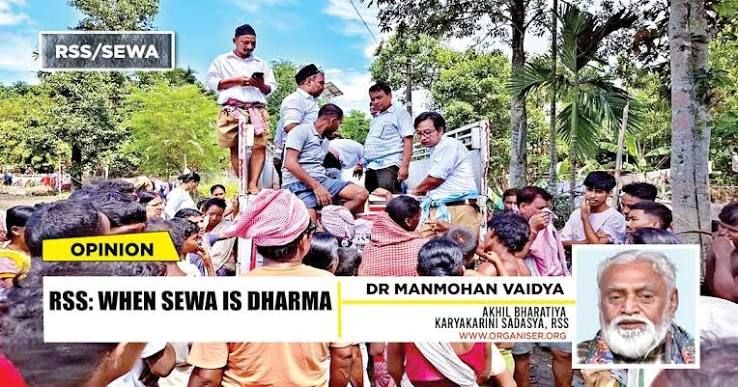
Vichar · Essay RSS, Bharat and the Dharmic Perspective on Sewa For the Bharatiya tradition, Dharma is not merely a matter of belief or worship; it is expressed through responsibility towards society. From selfless service in times of crisis to everyday acts of giving, the instinct to see others as one's own transforms compassion into action. Dr Manmohan Vaidya · Organiser, 20 September 2026 “Vaishnava Jana To Tene Kahiye Re, Peed Parai Jaane Re” — one who truly deserves to be called a noble human being is one who understands the pain of others. To feel the suffering of others and, in that feeling, naturally act to relieve them from it: this has been called Dharma. I seek neither a kingdom, nor heaven, nor even emancipation. My only wish is that those scorched by suffering and burdened by pain may find relief. — King Rantideva It was this understanding of Dharma that was carried into the nation's institutions after Independence by the architects of Bharat and the framers of her Constitution. Above the Speaker's seat in the Lok Sabha is inscribed “Dharma Chakra Pravartanaya” (for the propagation of the Wheel of Dharma). In the Rajya Sabha, “Satyam Vada, Dharmam Chara” (speak the truth, practise Dharma). The motto of the Supreme Court reads “Yato Dharmastato Jayah” (where there is Dharma, there is victory), and the Ashoka Chakra at the centre of the national flag is also associated with the Dharma Chakra. In the Bharatiya understanding, “Rashtra” does not mean what “nation-state” means in the West. Here, the nation is understood as society itself. Dr S Radhakrishnan described this spiritual, integral and holistic Bharatiya view of life as the “Hindu View of Life”. To live by Dharma on this foundation is itself an expression of Hindutva. The society that lives across the whole of Bharat is one; we are all equal, and all belong to one another. This is what a swayamsevak absorbs through the shakha and by living alongside fellow karyakartas from across the country. Society has witnessed, again and again, the tireless and heartfelt service of swayamsevaks in times of calamity — the horrors of Partition, earthquakes, floods, or a pandemic such as Covid-19. Even those who oppose the Sangh's philosophy have been moved by their patriotism, discipline, dedication and service, and have not withheld their praise. When Sewa becomes Dharma In 1977, a devastating cyclone struck the Diviseema coast of Andhra Pradesh. The alacrity and courage with which swayamsevaks undertook relief work, including cremating decomposing bodies — they came to be called the Shava Sena, or corpse brigade — are still remembered. When the destroyed village of Mulapalem was rebuilt with permanent housing for every family and renamed Deendayalpuram, External Affairs Minister Atal Bihari Vajpayee and Chief Minister Dr Chenna Reddy attended the inauguration and spoke highly of the Sangh's work. It was then that the Gandhian thinker Prabhakar Rao offered a new reading of the acronym: RSS, he said, truly stood for “Ready for Selfless Service”. In May 2009, Cyclone Aila struck West Bengal, causing severe damage in the 24 Parganas district. Swayamsevaks were in the field almost immediately. I travelled there shortly afterwards for a Sangh training camp, and to see the relief work had to go first by jeep, then by boat and finally on foot through knee-deep mud. When I asked who else was working in the area, I was told every other organisation was confined to the main roads; in the interior, where the destruction was worst, only Sangh swayamsevaks were present. In 2013, when a cloudburst caused catastrophic flooding at Kedarnath, swayamsevaks across the country were collecting funds for the victims. I received an email from M D Ramteke of Vidarbha: “I am a staunch opponent of the RSS. I am a staunch Ambedkarite… But I can say from my own experience that RSS people carry out relief work with great integrity. If you give them Rs hundred for the work, they will add ten of their own and spend a hundred and ten. So my appeal is this: if Sangh swayamsevaks come to you asking for relief funds at this time, help them generously.” It is from the shakha that a swayamsevak absorbs this instinct for selfless service. Swayamsevaks have continued this work after natural and man-made disasters alike. Driven by political hostility, the Congress Government banned the Sangh twice, in 1948 and 1975, and made every effort to suppress it. Yet through democratic resistance and steadfast struggle, the Sangh emerged each time with renewed strength. During the birth centenary of the Sangh's founder, Dr Keshav Baliram Hedgewar, in 1989–90, the idea emerged of a Sewa vertical through which the Sangh could establish regular contact with economically deprived sections of society in slums and address their basic needs. The Sewa Department was formed in 1991. Today, through numerous service organisations, swayamsevaks run 167,113 service projects in education, healthcare, social security and economic self-reliance. Swayamsevaks do this because their philosophical foundation rests on Hindutva — not a “religion” but a spiritual, integral and holistic view of life. It is on this basis of aatmiyata, a felt sense of belonging, that they serve without expecting anything in return. Some compare this with missionary “service”, but missionary service is often undertaken for the sake of conversion; where conversion was not a realistic prospect, no service was offered. In Ukhrul, near the Myanmar border in Manipur, the entire population had become Christian and there was no adequate arrangement for education. When the RSS pracharak Shankar (Bhaiyaji) Kane went there in 1971, he began taking children to Maharashtra to study. Sending a child so far with a stranger was not easy for parents, so Bhaiyaji left behind in Ukhrul a 12-year-old boy who had travelled with him, as a token of trust. Every child who came to study was Christian, and Bhaiyaji made no attempt to convert them. Once educated, they returned, earned well and, inspired by him, founded a school in Ukhrul — named Ojha Shankar Vidyalaya, “Ojha” being the local term of respect for an elder. From aatmiyata to social capital Before the word Sewa came into use in this sense, all such acts in Bharat were understood as belonging to Dharma. Here, Dharma does not mean religion; what English calls “religion” is closer to Upasana, or worship. Rooted in spirituality, Dharma holds the entire creation to be interconnected — which is why Vasudhaiva Kutumbakam has been part of Bharatiya life since ancient times. When the sense of “I” diminishes, the circle of “we” widens, and from that felt belonging arises the impulse to do something for others. To give back to society out of that belonging is true Dharma. Sister Nivedita observed that a society in which people do not keep the fruits of their labour entirely to themselves, but give back, grows rich through this accumulated social capital. Every act that enriches, preserves and strengthens this social capital is Dharma. Bharatiya thought gives equal weight to material prosperity (abhyudaya) and liberation (nihshreyas): “Yato'bhyudaya Nihshreyasa Siddhih Sa Dharmah”. Abundance in production, equity in distribution and restraint in consumption are its guiding principles. To give to society is charity; to give back to society is Dharma. — Rabindranath Tagore Dharma in everyday life Bharat has followed this tradition for centuries. A resting place for pilgrims is a Dharmashala; a Dharmadaya dispensary treats all without distinction. Building roads, planting shade trees, digging wells and step-wells and building ghats at places of pilgrimage were all regarded as acts of Dharma. During the Second World War, around 1,000 Polish women and children fleeing invasion aboard a ship were refused asylum by country after country — even in British-ruled Mumbai, though they were Christian. The Maharaja of Nawanagar (Jamnagar), Jam Saheb Digvijaysinhji Ranjitsinhji, had them brought by sea to Jamnagar, housed them at Balachadi and even brought seven cooks from Goa so they could keep their own diet. To keep the British from interfering, he signed adoption papers for them all: “You are my sons and my daughters; stay here as long as you wish.” They stayed nearly nine years, and a square in Warsaw is now named the “Good Maharaja Square”. On the night of 12 November 1996, a Saudi and a Kazakh airliner collided over Charkhi Dadri in Haryana, killing up to 351 people, almost all Muslims and some Christians. Within moments, district Sanghchalak Jitram ji, swayamsevaks and doctors from Dr Hedgewar Hospital reached the site, worked through the night by petromax lamps and generators, and moved the bodies to the hospital at Bhiwani. Where no family could be traced, the victims were buried according to their own faiths, with the help of local religious leaders. Three days later, Jitram ji was honoured at a thanksgiving gathering in the Dadri mosque. Newspapers carried the headline: “Khaki Shorts and Saffron Scarf Honoured in the Mosque.” We may sum it up thus: the Sangh's endeavour is that the individual should become Dharmapravan (inclined towards Dharma) and society Dharmadhishthit (founded on Dharma), rather than “Dharma-Nirapeksha” in the sense of being indifferent to it. That is what it means, in the Sangh's understanding, for the Rashtra to become Hindu. When it comes to service, Bharat's tradition has always been to perform it as Dharma — what Swami Vivekananda called serving Jeeva in the spirit of Shiva: to serve man is to worship God. |
|
 | Shri Vishwa Niketan: samvadnewsletter@gmail.com “Vasudhaiva Kutumbakam” the world is one family
|
|
|
Food for thought Be ready to bear everything for the sake of the people, like the great Guru Gobind Singh. After having shed his blood and the blood of his nearest and dearest, he retired from the field calmly to die in the South, but not a word of curse escaped his lips against those who had ungratefully forsaken him! — Swami Vivekananda |
|